
Effective Dissemination Models That Respect Rigor Without Sacrificing Clarity

- Why Dissemination Matters More Than Ever
- Defining Effective Dissemination Models
- Balancing Clarity and Rigor in Academic Communication
- The Role of Publishing Partnerships and Consortia
- Data, Metrics, and Responsible Visibility
- Peer Review as a Foundation for Trustworthy Dissemination
- Long-Form Scholarship and Dissemination Challenges
- Dissemination Strategy
- Institutional and Policy Implications
- Designing Dissemination for the Future of Scholarly Publishing
- Clarity as a Form of Scholarly Responsibility
Why Dissemination Matters More Than Ever
The digital transformation of scholarly publishing has expanded the potential audience for academic research. Policymakers, practitioners, journalists, and the public increasingly engage with scholarly outputs directly. This expanded reach amplifies both opportunity and risk.
Poor dissemination limits impact, regardless of research quality. Conversely, poorly framed dissemination can misrepresent findings, encourage misuse, or erode trust. Effective dissemination models recognize that clarity and rigor are not opposing goals, but complementary ones.
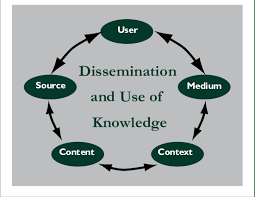
In this context, dissemination is best understood as a structured process that aligns communication strategies with the epistemic standards of scholarship.
Defining Effective Dissemination Models
Effective dissemination models are frameworks that guide how research outputs are communicated across different audiences while preserving methodological integrity. These models emphasize intentional design rather than ad hoc promotion.
Core characteristics include:
- Audience differentiation: Recognizing distinct knowledge levels and information needs.
- Layered communication: Offering multiple entry points to the same research.
- Transparency: Making assumptions, limitations, and methods visible.
- Consistency: Ensuring summaries align with the full findings.
When applied systematically, these principles reduce the risk of distortion while increasing reach and comprehension.
Balancing Clarity and Rigor in Academic Communication
Clarity does not require simplification of ideas to the point of inaccuracy. Instead, it involves careful explanation, logical structure, and explicit reasoning. Rigor is maintained when claims are supported by evidence and contextualized within existing literature.
One effective approach is the use of structured abstracts, graphical summaries, and plain-language explanations that complement, rather than replace, the full academic text. These elements function as gateways, guiding readers toward deeper engagement.
Such practices align with the goals of the Helpful Content framework, prioritizing usefulness without compromising depth.

The Role of Publishing Partnerships and Consortia
Dissemination is not solely the responsibility of individual authors. Publishers, libraries, and research institutions increasingly collaborate to develop shared dissemination infrastructures.
Models explored in publishing partnership consortia demonstrate how coordinated efforts can expand access while maintaining editorial standards. These partnerships support sustainable dissemination through shared platforms, metadata standards, and discovery tools.
By pooling expertise and resources, consortia reduce duplication and enable consistent quality across dissemination channels.
Data, Metrics, and Responsible Visibility
Metrics play a growing role in assessing dissemination success. Downloads, views, and mentions offer insights into reach, but they must be interpreted carefully.
As discussed in data-driven publishing metrics, quantitative indicators should complement, not replace, qualitative evaluation. Effective dissemination models treat metrics as diagnostic tools rather than performance targets.
Responsible visibility prioritizes meaningful engagement over sheer volume, recognizing that not all audiences contribute equally to scholarly impact.
Peer Review as a Foundation for Trustworthy Dissemination
Peer review remains central to maintaining rigor across dissemination formats. Regardless of how research is summarized or shared, the underlying work must meet disciplinary standards.
Examined in innovations in peer review highlight how transparent and open review processes can strengthen dissemination by making evaluation criteria visible.
When readers understand how research has been vetted, they are better equipped to interpret summaries and secondary communications accurately.
Long-Form Scholarship and Dissemination Challenges
Academic monographs and extended studies pose particular dissemination challenges. Their depth and length resist condensation, yet they often contain insights of lasting value.
Research on academic monographs in the digital age shows that layered dissemination—combining executive summaries, thematic excerpts, and digital discovery tools—can enhance accessibility without diminishing scholarly substance.
Such strategies respect the integrity of long-form work while acknowledging contemporary reading practices.
Dissemination Strategy
Effective dissemination models reinforce credibility rather than dilute it. Expertise is demonstrated through clear explanation of complex ideas. Experience is reflected in awareness of audience needs. Authoritativeness emerges from consistent alignment with disciplinary norms.
Trustworthiness depends on honesty about uncertainty and limitations. Dissemination that obscures nuance or exaggerates findings undermines trust, even if it attracts attention.
Organizations such as the National Academies of Sciences emphasize that responsible science communication must preserve context and uncertainty alongside clarity.
Institutional and Policy Implications
Institutions and funders increasingly require dissemination plans as part of research proposals. These requirements create incentives to formalize dissemination strategies.
However, policies must avoid equating dissemination quality with promotional success. Effective dissemination models emphasize alignment with research objectives, target audiences, and ethical standards.
When institutions reward clarity, transparency, and contextual accuracy, they reinforce behaviors that strengthen the research ecosystem.
Designing Dissemination for the Future of Scholarly Publishing
The future of scholarly publishing depends on dissemination systems that scale without sacrificing integrity. Digital tools offer unprecedented reach, but only thoughtful design can ensure that reach translates into understanding.
Discussions around the evolution of academic publishing suggest that dissemination will increasingly be embedded within publishing workflows, rather than treated as an afterthought.
Embedding dissemination at the design stage allows authors and publishers to anticipate how research will travel and be interpreted.
Clarity as a Form of Scholarly Responsibility
Effective dissemination models do not ask scholars to choose between rigor and clarity. Instead, they redefine clarity as a scholarly responsibility—one that respects the intelligence of diverse audiences while remaining faithful to evidence.
By adopting structured, transparent, and audience-aware dissemination strategies, the academic community can expand the reach of knowledge without eroding its foundations. In doing so, dissemination becomes not a compromise, but an extension of scholarly excellence.