
Regulating Impact Metrics: Can an International Body Standardize Practices

Metrics have become deeply embedded in the evaluation of research performance. Citation counts, usage data, social indicators, and composite scores increasingly influence hiring, promotion, funding, and institutional rankings. While these indicators promise objectivity and comparability, they also introduce significant risks. As concerns grow about misuse and inconsistency, a central question emerges: can an international body effectively regulate impact metrics and standardize practices across disciplines and borders?
The debate is not about whether metrics should exist, but about how they should be governed. Without shared standards, impact assessment risks becoming fragmented, opaque, and susceptible to distortion. Addressing this challenge requires examining both the technical and political dimensions of global metric regulation.
- The Proliferation of Impact Metrics in Academia
- Why Regulation Has Become a Global Concern
- The Case for an International Regulatory Body
- Lessons from Existing Metric Initiatives
- Challenges to Global Standardization
- Peer Review and Metrics: Complement or Conflict?
- The Role of Consortia and Collaborative Governance
- Transparency as a Regulatory Principle
- Ethical Dimensions of Impact Measurement
- Impact Metrics and the Future of Scholarly Publishing
- Can Standardization and Flexibility Coexist?
- Toward Responsible Global Governance of Metrics
The Proliferation of Impact Metrics in Academia
Over the past two decades, the number and variety of academic metrics have expanded dramatically. Beyond traditional citation-based indicators, publishers and platforms now track downloads, views, mentions, and engagement across digital environments.
This proliferation reflects genuine needs: funders seek accountability, institutions want benchmarks, and researchers desire recognition. However, the rapid adoption of impact metrics has often outpaced critical evaluation of their validity and limitations.
As a result, metrics that were designed as descriptive tools are frequently used prescriptively, shaping behavior and priorities within the research system.
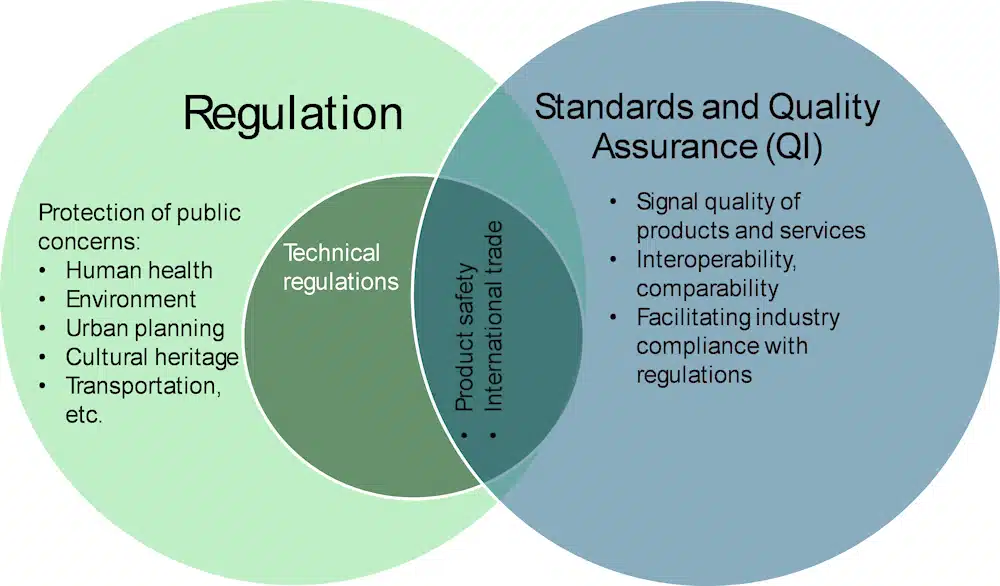
Why Regulation Has Become a Global Concern
The lack of consistent standards has led to wide disparities in how research impact is measured and interpreted. Different platforms calculate similar indicators in incompatible ways, while institutions apply metrics selectively to support predefined outcomes.
These inconsistencies undermine trust. Researchers struggle to understand how they are evaluated, and decision-makers risk basing judgments on incomplete or misleading data. When impact metrics are treated as universal measures without contextualization, they can distort incentives and disadvantage certain fields or regions.
Calls for regulation arise from a desire to restore credibility, transparency, and fairness to research assessment.
The Case for an International Regulatory Body
Proponents of global oversight argue that an international body could provide a neutral framework for standardizing definitions, methodologies, and reporting practices. Such a body could function similarly to organizations that set standards in other domains, offering guidance rather than enforcement.
Potential roles might include:
- Establishing shared terminology for commonly used metrics
- Defining minimum transparency requirements
- Publishing best-practice guidelines for responsible use
- Facilitating cross-disciplinary dialogue
By harmonizing practices, an international framework could reduce confusion and promote comparability without imposing uniformity.
Lessons from Existing Metric Initiatives
The scholarly community has already experimented with collective approaches to metric governance. Declarations and principles have emerged in response to growing dissatisfaction with metric-driven evaluation.
Insights from the power of data, metrics, and analytics highlight that metrics are shaped as much by social values as by technical design. Effective governance therefore requires both methodological rigor and ethical reflection.
These initiatives demonstrate that consensus is possible, but also reveal the difficulty of translating principles into consistent practice across institutions.
Challenges to Global Standardization
Despite its appeal, international regulation faces substantial obstacles. Academic disciplines differ widely in publication practices, citation behaviors, and timelines of influence. A metric meaningful in biomedical sciences may be inappropriate in the humanities.
National research systems also operate under distinct funding models and policy priorities. Imposing rigid standards risks erasing legitimate diversity and reinforcing existing power imbalances.
Moreover, metrics are often embedded in proprietary platforms. Without cooperation from commercial stakeholders, regulatory efforts may lack practical impact.
Peer Review and Metrics: Complement or Conflict?
One of the central tensions in metric regulation lies in the relationship between quantitative indicators and qualitative judgment. Peer review remains the cornerstone of academic evaluation, yet metrics increasingly compete for authority.
Discussions in peer review under pressure illustrate how overreliance on metrics can marginalize expert assessment. When numerical scores overshadow reviewer insight, evaluation becomes reductive.
Any regulatory framework must therefore emphasize that metrics are supplementary tools, not replacements for peer judgment.
The Role of Consortia and Collaborative Governance

Rather than a single centralized authority, some scholars advocate for networked governance models. Publishing consortia, library alliances, and research organizations can collaborate to align practices while preserving autonomy.
Examples discussed in publishing partnership consortia show how shared governance structures can support standardization through consensus rather than coercion.
Such models may be better suited to the decentralized nature of global academia.
Transparency as a Regulatory Principle
One area where international agreement appears achievable is transparency. Regardless of discipline or region, stakeholders benefit from clear documentation of how metrics are generated and applied.
Transparency enables informed interpretation and discourages misuse. When assumptions, data sources, and limitations are visible, users can assess relevance rather than accepting metrics at face value.
An international body could play a valuable role by defining transparency benchmarks and auditing compliance.
Ethical Dimensions of Impact Measurement
Metrics shape behavior. When researchers know they are evaluated through specific indicators, they adapt strategies accordingly. This dynamic raises ethical questions about unintended consequences.
International organizations concerned with research integrity emphasize that responsible evaluation must avoid incentivizing superficial productivity or strategic gaming. Ethical frameworks, such as those promoted by the Council of Europe’s research ethics initiatives, stress proportionality and human oversight in data-driven assessment.
Ethics should therefore be integral to any regulatory effort, not an afterthought.
Impact Metrics and the Future of Scholarly Publishing
The evolution of academic publishing continues to reshape how impact is understood. Open access, preprints, and digital dissemination expand the range of measurable interactions.
Reflections on the evolution of academic publishing suggest that impact will increasingly encompass societal engagement alongside scholarly influence.
Regulation must remain flexible enough to accommodate emerging forms of contribution without locking the system into outdated models.
Can Standardization and Flexibility Coexist?
The central challenge is balancing consistency with contextual sensitivity. Effective regulation does not impose identical metrics across all contexts, but provides a shared foundation for interpretation.
A layered approach may offer the best path forward: core standards for transparency and methodological soundness, combined with discipline-specific adaptations developed by scholarly communities.
Such an approach recognizes diversity while fostering coherence.
Toward Responsible Global Governance of Metrics
The question is not whether impact metrics should be regulated, but how regulation can support trust, fairness, and scholarly values. An international body alone cannot solve all problems, but it can catalyze coordination, dialogue, and shared responsibility.
By emphasizing transparency, ethical use, and the primacy of expert judgment, global governance efforts can mitigate the risks associated with metric-driven evaluation. In doing so, the academic community can ensure that impact metrics serve research, rather than redefine it.