Journal Authors' Rights: Perception and Reality
Journal Authors' Rights: Perception and Reality is a 2009 summary paper by Sally Morris for the Publishing Research Consortium. It compared what authors believe they may do with their articles, such as posting a version online or using it in teaching, with what publisher agreements actually allow, using a survey of authors and a review of publisher agreements.
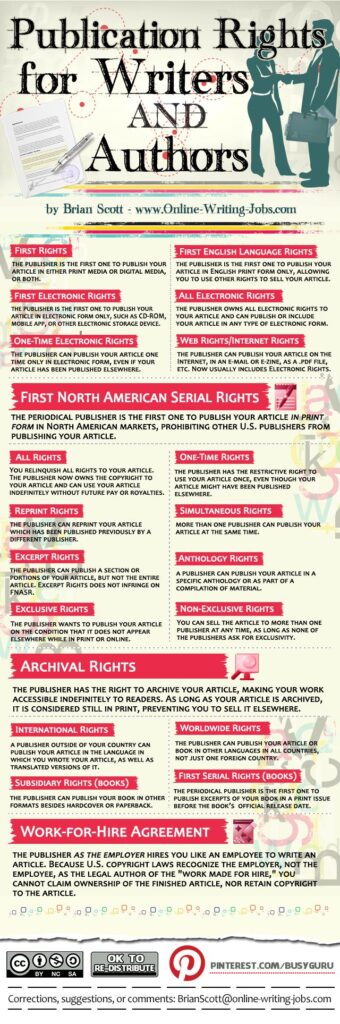
Journal authors' rights are the uses an author may make of a scholarly article: reproducing it, distributing it, adapting parts of it, or placing a version in a repository. In the 2009 PRC summary paper, these uses depend on whether the author transfers copyright or grants a license, and on the clauses of the specific journal agreement. Researchers should check their journal's policy and ask their institutional library when a use is unclear. Attribution and reuse rules are part of ethics in scientific publishing, but the report itself does not give legal advice.
Two common arrangements shape what a journal author may do: copyright transfer and a license.
| Arrangement | What changes for the author |
|---|---|
| Copyright transfer | The publisher becomes the rights holder; the author's uses are those the publisher grants back in the agreement. |
| License | The author keeps copyright and grants the publisher defined uses; uses outside the license remain the author's to consider. |
These descriptions are general, not legal advice. The wording of each journal agreement, not the label alone, determines what an author may do. These options sit within wider scholarly publishing trends toward open access and retained rights.
What did the study cover?
Sally Morris wrote the summary paper for the Publishing Research Consortium, which published it in March 2009 as PRC Summary Paper 5. The study grew from a journal authors' rights survey conducted in 2008 by GfK among 1,163 authors, combined with a review of author agreements from 181 publishers. The original summary page, captured December 7, 2019, reported that those publishers accounted for about 75 percent of articles published. Morris presented the comparison at APE 2009. The paper is part of the longer story of how academic publishing has evolved.
Which article versions and uses does the comparison cover?
The study compared three versions of a journal article and two uses: self-archiving and course packs. Because author rights by article version differ, policies can vary even between two versions of the same article. These distinctions matter as digital publishing of research expands repository sharing.
| Article version | What it means | Self-archiving | Course packs |
|---|---|---|---|
| Submitted version | The manuscript as first sent to the journal, before peer review. | included in the comparison | included in the comparison |
| Accepted version | The manuscript after peer review and revisions, before the publisher's final layout. | included in the comparison | included in the comparison |
| Published PDF | The final published version of record, as it appears in the journal. | included in the comparison | included in the comparison |
The table describes the categories the study compared; it does not state which uses each agreement permitted.
What the report found
The original summary page reported that authors tended to overestimate how freely they could archive the published PDF. That finding dates from 2009 and may not match current journal policies. For the full comparison by version and publisher category, read the full report.
FAQ
Journal Authors' Rights: Perception and Reality is a 2009 Publishing Research Consortium summary paper by Sally Morris. It compares what journal authors believe they may do with an article and what publisher agreements allow.
That depends on the journal's author agreement. Researchers should check the journal policy and ask their institutional library when a use is unclear.
Is copyright transfer the same as a license?
No. With a copyright transfer, the publisher becomes the rights holder and may grant uses back. With a license, the author keeps copyright and grants specific uses to the publisher.
Sources
- Morris, Sally. Journal Authors' Rights: Perception and Reality. PRC Summary Paper 5. Publishing Research Consortium, 2009.
- Original summary page for the report, captured December 7, 2019.
- SHERPA/RoMEO, for checking publisher policies by journal: https://v2.sherpa.ac.uk/romeo/